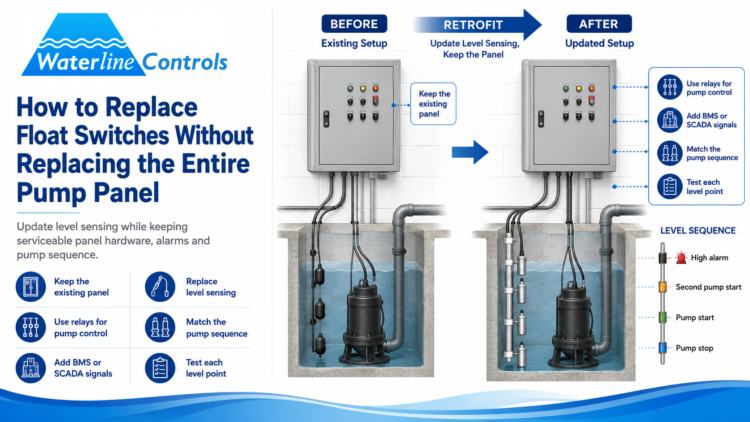
Pump panel retrofit with float switches replaced by electronic level sensing probes while the existing panel is kept
Written by Waterline Controls

Float Switch Replacement for an Existing Pump Panel

Float switch replacement in an existing pump panel changes how the panel senses water level while keeping the motor starters, overloads, disconnects and wiring that are still serviceable. A troublesome float switch does not automatically mean that every component in the pump control system has reached the end of its useful life.

If the existing power components remain suitable, it may be possible to update level sensing while retaining much of the existing control equipment. The retrofit still needs to begin with the existing sequence.

Document What Every Float Does

Before removing anything, identify each float and the condition it controls.

A commercial sump may have separate points for pump stop, pump start, second pump start and high level alarm. Other systems may use floats for filling or low level protection.

Do not assume wire color identifies function.

Trace the circuits and compare them with the panel drawings. If the drawings no longer match the installation, update them before designing the replacement.

Keep Pump Power Separate From Level Sensing

The level sensing circuit tells the system what the water is doing. It does not necessarily carry the motor load itself.

Large pumps commonly operate through motor starters or contactors sized for the equipment.

Documentation for the WLC-9100 duplex pump-down level controller notes that its relays can be used as pilot relays for properly rated pump contactors.

That means the existing power hardware may remain part of the final design when it is in good condition and properly rated.

Match the Existing Sequence

A replacement level system should reproduce the required operating logic rather than simply copying the physical locations of old floats.

Waterline Controls offers simplex and duplex pump-down controllers, with high and low alarms available on selected models. Their dry contacts can report status to an existing control system.

If the old arrangement alternated pumps or used staged starts, select the new controls around that requirement. On the WLC-9000 A/C duplex pump-down controller, the A version is sequenced and the C version alternates. On the WLC-9100, A and B are sequenced and C and D alternate. Confirm which suffix matches the existing panel logic.

Check Sensor Cable Routing

Electronic sensing introduces its own installation requirements.

Waterline Controls installation instructions call for the sensor cable to run in earth-grounded metal conduit, separate from the conduit that carries high voltage lines, to reduce unwanted interference.

A retrofit is a good opportunity to correct questionable cable routing left from previous modifications.

Decide Which Signals Go to SCADA or BMS

Older float panels may provide only local lights or alarms.

An updated level control can add dry contacts for remote monitoring without requiring the BMS to control the pump sequence itself.

Possible points include pump calls, high level, low level and controller power loss, depending on the selected model.

Keep the local automatic sequence capable of doing its job even if remote monitoring is unavailable, unless the project design intentionally says otherwise.

Test Each Level Point

Commission the retrofit one function at a time.

Raise or simulate the water level and verify pump start, second pump operation, alarms and shutdown. Test manual controls separately.

Then verify the remote signals. For point-list details, see which BMS points a water level controller should report.

Where the selected controller has a press-to-test button, follow the model’s instructions to run the test sequence and confirm relays and connected devices respond.

Float Switch Replacement Controllers for Existing Panels

Waterline Controls manufactures frequency-based float switch replacement controllers for commercial sumps, lift stations, wastewater systems and other pump applications. Existing motor starters and panel components may be retained when the design and condition permit. For the cooling tower side of the same problem, see why float switches fail in cooling tower level control. Call 480-905-1892 to discuss the existing sequence, pump sizes, panel arrangement, alarm requirements and sensor locations before planning your retrofit.

References

Water and wastewater level controls

WLC-9100 A/B/C/D duplex pump-down controller with high alarm
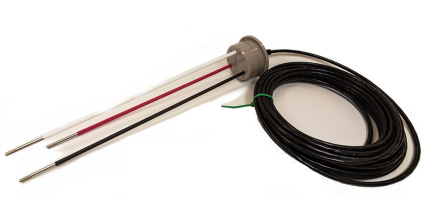
WLC-9000 A/C duplex pump-down controller

Float switch replacement controllers

Written by Waterline Controls

Why Float Switches Fail In Cooling Towers And What To Use Instead

Float switches are simple. That is part of the appeal. A float rises, a float falls, and the system responds.

At least, that is the idea.

In a real cooling tower, things are rarely that tidy. Water is moving. Heat is constant. Minerals build up. Parts age. Debris gets where it should not be. A float that worked fine last season may start hanging up, sticking, or giving the wrong signal just when the building needs the tower to behave.

That is why many facility managers eventually start looking for something better than the old mechanical float setup.

Float Switches Have Moving Parts

The biggest weakness of a float switch is also the most obvious one. It moves.

Any part that moves can wear, stick, corrode, loosen, or get knocked out of position. In clean water and easy conditions, a float switch may last a long time. In a cooling tower basin, it has a harder life.

Scale, biofilm, rust, treatment chemicals, vibration, and changing water conditions can all make a simple float less reliable. The failure may not happen all at once. It may start with short cycling, odd fill behavior, or a water level that never seems quite right.

That kind of problem wastes time because it is not always obvious from the ground.

Bad Level Control Can Create Bigger Problems

A poor water level signal is not just a nuisance. It can affect the way the whole system runs.

If the basin level gets too low, pumps and equipment may be put at risk. If the level gets too high, water can be wasted or overflow where it should not. If the control keeps cycling on and off, valves and other parts may take unnecessary wear.

In commercial buildings, hospitals, data centers, manufacturing sites, and other facilities, nobody wants a cooling tower issue to become the reason everything else gets attention.

Good level control is not glamorous, but it matters.

Electronic Controls Remove The Mechanical Float

Electronic water level controls are designed to take the mechanical float out of the equation. Instead of relying on a float arm or ball moving up and down, the system uses sensors and a controller to manage the water level.

That can be a major advantage in cooling tower basins, remote sumps, evaporative condensers, and similar applications.

With no traditional float to hang up, the system can be more stable and easier to trust. It can also provide clearer operating information, depending on the controller and setup.

Think About Maintenance, Not Just Purchase Price

A float switch may look cheaper at first. Sometimes it is. But the real cost is not always the part itself.

The real cost is the service call, the downtime, the repeated troubleshooting, the water waste, and the frustration of replacing the same type of component again.

If your team keeps fighting the same water level problem, the question is not only “What does the replacement cost?” The better question is “Why are we still dealing with this?”

That is where an electronic water level control can make sense. It may be the more practical long term choice for a system that needs to work without constant attention.

When To Consider Replacing A Float Switch

It may be time to look at another option if your float switch sticks, fails repeatedly, causes short cycling, gives inconsistent level control, or struggles in poor water conditions.

It is also worth considering an upgrade during cooling tower maintenance, equipment replacement, or control system improvements. If the tower is already being serviced, that can be a good time to solve the water level issue properly.

Talk To Waterline Controls

Waterline Controls manufactures electronic water level controls and sensors for cooling towers, tanks, sump controls, fire protection, HVAC systems, and other wet environment applications.

If you are tired of replacing float switches or chasing unreliable level control problems, Waterline Controls can help you choose a system built for your application.

Contact Waterline Controls today to ask about electronic water level controls for cooling towers and other commercial systems.

References

Waterline Controls

Waterline Controls Cooling Tower Level Controls

Waterline Controls Float Switch Alternatives

Waterline Controls Contact Page

Written by Waterline Controls

Float Switch Working Principles

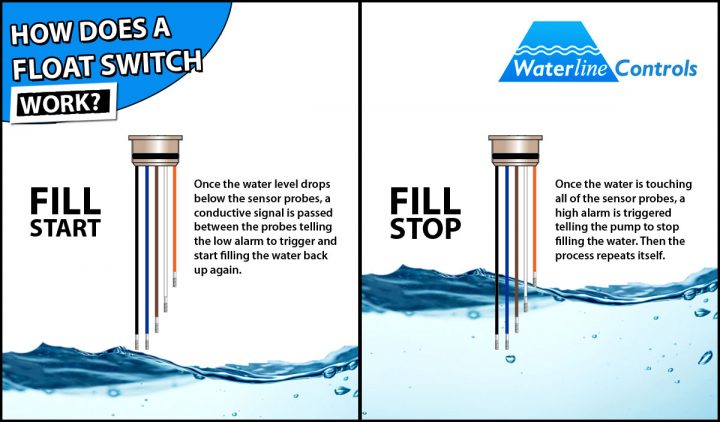
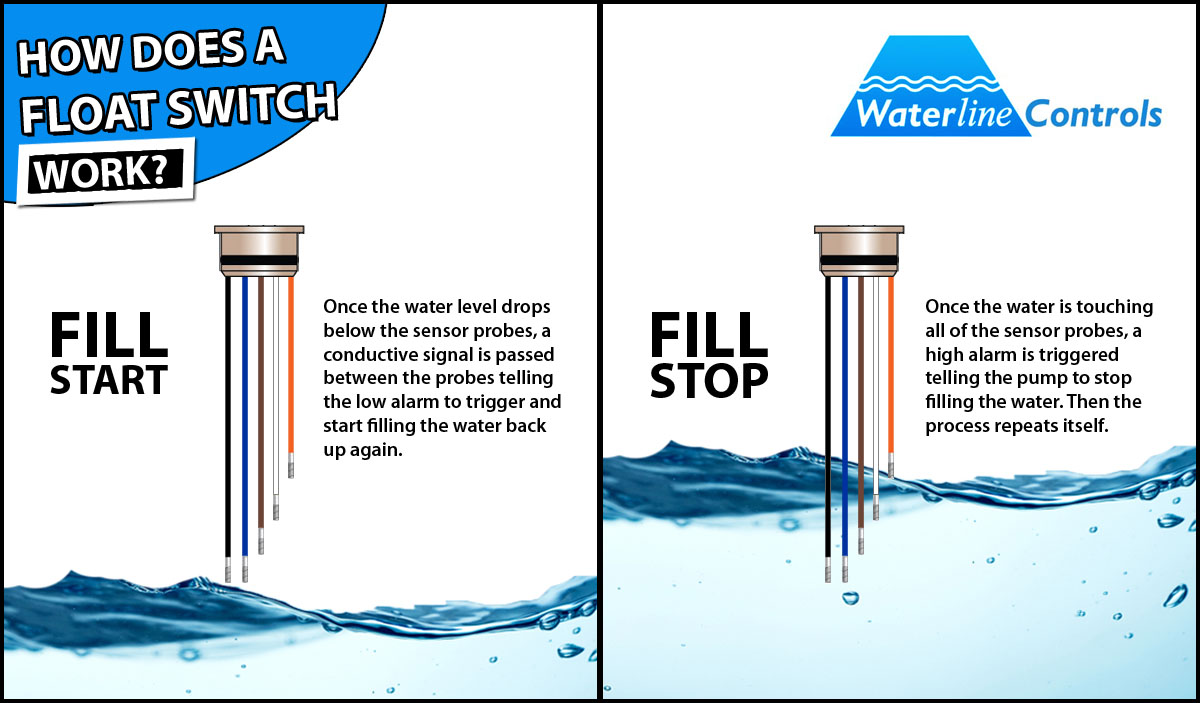
How Does a Float Switch Work?

A float switch is a simple device used to detect the level of liquid within a tank or system and control equipment like pumps, alarms, or valves. Here’s how it works:

⚙️ Float Switch Working Principles

🔹 1. Basic Concept

A float switch relies on a buoyant object (the float) that moves up or down with the liquid level. When the float reaches a certain height, it triggers a switch—either opening or closing an electrical circuit.

🧰 Types of Float Switches & How They Work

🔸 Mechanical Float Switch

  • How it works: A float is physically connected to a mechanical switch.

  • Action: As the float rises or falls with the liquid, it moves a lever or tilts, toggling a microswitch inside the housing.

  • Use case: Sump pumps, water tanks, bilge alarms.

🔸 Magnetic Reed Float Switch

  • How it works: The float contains a magnet, and the switch inside the stem is a reed switch (a magnetically operated contact).

  • Action: When the float rises or lowers, the magnet moves near the reed switch, causing it to open or close.

  • Use case: Industrial liquid level sensors, HVAC systems.

🔸 Mercury Tilt Switch (older design)

  • How it works: The float tilts and shifts a small sealed capsule containing mercury.

  • Action: The mercury makes or breaks contact as it moves inside the capsule.

  • Use case: Less common now due to mercury hazards.

🔌 Wiring Logic (Normally Open vs. Normally Closed)

  • NO (Normally Open): The circuit is open until the float rises or falls to trigger it—then it closes and sends power.

  • NC (Normally Closed): The circuit is closed until the float changes position—then it opens.


💡 Typical Applications

Application Float Switch Role
Water pumps Turns pump on/off when water hits set level
Tank overfill protection Triggers alarm or shutoff if level too high
Aquarium sump systems Auto top-off to maintain water level
Industrial tanks Monitors chemical or fluid levels

Why Choose Water Line Controls

All of our water level controls and water level control systems are assembled right here in the U.S.A. where we monitor every step of the process. The are many reasons to choose Waterline Controls™ for all of your float switch and water level controller needs include:

SIMPLE DESIGN

No moving parts or mechanical floats to break or rust!

BEST TECH SUPPORT

No runaround, no guessing, no stupid answers. You’ll talk to the guy who’s been designing and installing these units for over 20 years.

BUILT TO LAST

Makes it easy to integrate with existing Building Management Systems and has an expected useful life of 15 years.

TOUCH TO TEST

One push of the button starts a complete validation cycle to ensure all systems are working properly.

RELIABLE & ACCURATE

Will not foul, plate, or deteriorate regardless of water quality.