What Is a Break Tank in a Fire Protection System?
Written by webtechs

What Are Fire Protection Systems?

Minimizing the risk of fire at your business or home is highly important. Read on to learn more about the different types of fire protection systems.

Business owners need to know how to be safe from fire. A fire can start in a flash and spread in a matter of seconds. When fire protection systems work as they should, businesses that pay for them get a lot of benefits. These measures help keep the facility, pricey equipment, papers, and goods from becoming damaged. Fire suppression systems, smoke detectors, and sprinkler systems are all sorts of fire protection systems that help find fires and keep people and equipment safe in buildings.

How a Fire Protection System Works

You should know how fire protection systems work. Different systems work in different ways, but they all have the same goal: to find a fire and keep the building, its people, and its belongings safe. A smoke detector and a sprinkler are two things that are often used to defend against fire. If a fire starts, smoke will set off the detector, which will turn on the sprinkler system. Water keeps the fire from spreading. This is a good way to do things, but when it comes to particular important equipment or special hazards, automatic fire suppression systems that use clean agents are a superior choice. These systems find and put out fires without leaving any trace.

The Advantages of Fire Protection Systems

One of the best things about a fire protection system is that it saves money in the long term. Think about a business and how much money it spends on things like infrastructure, manufacturing equipment, and IT hardware. A fire that stops work for a long time could cost a business millions of dollars. A machine shop that makes parts is a great example. The business would lose a lot of money if the shop caught fire and had to close for several days or weeks. You might have to buy new equipment, and you could lose important contracts. When businesses look at the expense of a fire prevention system, they need to think about all the elements.

Some types of fire prevention systems also have the advantage of automatically sending emergency services. These systems will work to put out the fire right away and let the authorities know to deploy emergency workers to your location.

Finding the Right Fire Protection System

How do you figure out which system is ideal for your business? You need to think about the building you are safeguarding, if it meets construction rules, and what insurance you would need. You might want to think about your facility’s future demands, not simply its current needs, because many fire protection systems are permanent. For instance, if you’re securing a server room and want to add more servers over time, can you add to the system?

When choosing and setting up a system, it’s important to pick a provider that knows exactly what you need and can tailor your fire protection solutions to fit those demands. You could be exposed to risk and downtime if your building isn’t up to code or your machinery and equipment aren’t well protected.

Fire protection That is Active vs. Passive

There are two types of fire protection: active and passive. When a structure is under construction, the contractor and architect can integrate passive fire protection, such as fire doors and fire escapes. Using materials that don’t catch fire during construction is another example of passive fire defense. Active fire protection, on the other hand, entails using a system that reacts when there is a fire. Fire sprinkler systems and specific hazard fire suppression systems are two examples of active fire defense.

Detection Needs To Work!

It’s also quite important to choose between active and non-electric fire detection. You don’t need power to use non-electric fire detection. You can be sure that your fire protection system will work even if the power goes out.

You should also think about the system’s features and any services that come with it. Will the system be able to detect things all the time? Does it let the police know when it goes off? What do you suggest for regular testing or inspection of the equipment?

Fire prevention systems are very crucial for keeping people, things, and buildings safe. A fire suppression system could be the best way to protect important machines or equipment.


Waterline Controls™

Our level sensors and controls aren’t just for use in residential potable water holding tanks; some of the other applications include cooling towers, sump pumps, wastewater, boilers, water storage tanks, and building fire protection water tanks.
Choosing the Best Tank Level Sensor
Written by jeremy

What is a Liquid Level Sensor? Level Switch Types

Liquid level sensor definition: Level Switches, also known as liquid level sensors, are a way to regulate and monitor levels of liquid like oil or water.

Liquid Level Sensor Types | Level Switch Types

Tuning fork models, tilt, vibrating rod, paddle, optical, inductive, float, displacer, diaphragm, conductive, and capacitive are the different types of level switches available.

Capacitive Level Sensors

Capacitive level switches or sensors use a probe with electrical contacts to monitor tank levels for powders or liquids. Traditionally these are low maintenance sensors and are used in for non-conductive materials like wood, ceramic, plastic, and other chemicals.

Conductivity Level Sensors

Conductivity level switches use electrical contacts with sensors to measure liquid levels. You can see these used in oil tanks, water reservoirs, ponds, pressure vessels, pharmaceuticals, and closed tanks.

Displacer Level Sensors

Displacer level switches are sensors with electrical contact and suspended coil springs to monitor liquid levels. Since they are surrounded by coils they are undisturbed by outside pressure and other forces. These sensors are used in viscous applications like oil refineries, chemical plants, and paint factories.

Tuning Fork Level Sensors

Tuning Fork level sensors are cost-effective and reliable switches with an electrical control connected to alarms and pump shutoffs. Due to their versatility and low cost, they are found in several different areas including construction, chemical, mining, and agriculture.

Float Level Sensors

Float level switches are sensors with an electrical contact output at a specific liquid level. Applications include level control, valve control, deaerators, condensate tanks, oil level control, drip legs, and boilers. A few models are designed for the automation of pumps, specifically filling and draining of tanks, wells, and reservoirs.

Optical Level Sensors

Optical level switches do not use any moving parts to detect changes in levels since they rely on infrared light. These types of sensors are not recommended to measure liquids that can crystallize or harden on the sensors since this will lead to incorrect levels being reported. However, these sensors are perfect candidates for applications that need to be accurate and tight fitting like dialysis machines, HVAC systems, pharmaceutical operations, and hydraulic applications.

Paddle Level Sensors

Paddle level switches are side or top-level mounting and use sensors with electric contacts. These are often found in grain silos, mining applications, and the beverage industry.

Diaphragm Level Sensors

Diaphragm level switches also known as a pressure switch works off of tiny sensors connected to an electric contact. These switches are usually used in granular materials because of their economical cost and versatility. Typically found in grain silos, mines, agriculture, and the beverage industries. The flexibility also comes from the areas they can be mounted internally or externally as well as in combination with horns, lights, and alarms.

Rod Level Sensors

Rod level sensors are economical switches that use vibrations to measure bulk solids and powder levels. These models are highly accurate and require low maintenance since they do not allow for build up and are based on a rod moving up and down for measurement.

Tilt Level Sensors

Tilt level sensors are connected to electric contacts to measure the presence or absence of materials based on pressure levels. Since they have high accuracy levels and can be delayed based on timers you will find these sensors in multiple industries like food, agriculture, hoppers, and other bulk solids like pellets or stones.

Never Replace Liquid Level Sensors Again with Waterline Controls™

Our level sensors and controls aren’t just for use in residential potable water holding tanks; some of the other applications include cooling towers, sump pumps, wastewater, boilers, water storage tanks, and building fire protection water tanks.

blank
Written by webtechs

Lack Of Sprinkler System Increases Injury And Death

Lack Of Sprinkler System Increases Injury And Death

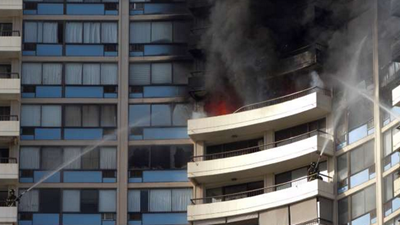
On Friday, July 14, 2017, a high-rise building fire in Honolulu, Hawaii, spread from one unit to additional units and threated engulfing the entire building after a fire broke out in one unit on the 26th floor of an apartment building. At least 3 casualties and over a dozen injuries have been reported so far. The expansion of the fire beyond the source was believed to have been the result of a building that was built in 1971, before sprinklers were required in such type of buildings, that has never been upgraded.

hawaii-fire

Many residents reported no warnings or alarms either and most said the smoke was what alerted them to the conflagration. Honolulu Mayor Kirk Caldwell stated “residents have to pay” if they want sprinkler safety protection, “It’s pretty expensive. But if it saves a life and it’s your life, it’s worth the cost.” Many local ‘rumblings’ indicated there are others that disagree and it seems possible the rules will soon be looked at to see if is possible to require such upgrades.

Most residents also indicated there were no fire safety meetings or drills they could remember…since a few after the last fire in 2003. Many residents, as reported by several local TV stations, were unaware the building had no fire sprinkler system and had never heard of any meetings or drills relating to emergency situations.

The fire burned for around 4 hours and was mostly confined to 2 floors, due to the quick reactions from the approximately 100 fire fighters that responded to the blaze.

According to the National Fire Protection Association (NFPA), there was an 80% lower risk of death and a reduction of 71% in property damage costs in buildings equipped with fire sprinklers vs. those without, between 1996 and 2001.

Altitude Valve
Written by webtechs

Replace Altitude Valves with Modern Controllers

Replace Altitude Valves with Modern Controllers

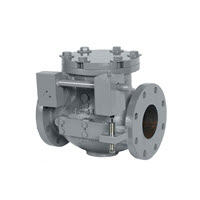
Many ground level or elevated water storage systems use what is known as an Altitude Valve. These valves close at a preset high-level to prevent overflow of water in a ground storage tank or reservoir, opening to refill the water in the tank or reservoir as the level lowers. In crude systems they are reliable and effective.

Modern water storage requirements are not usually well served by such stand-alone devices though.

Fire Safety Water Holding Tanks

For fire protection, a much more effective, less temperamental and less expensive solution is an electronically operated system that connects to automated building management systems, has alarms, or even redundant switching and alarms.

FPT50 ControllerA better solution for Fire Safety holding tank systems, and a replacement for them, is the Waterline Controls WLC FPT-50. This Fire Service Water Tank Level Control with high and low alarms gives you modern, state of the art control, visible and audible alarms, and peace of mind.
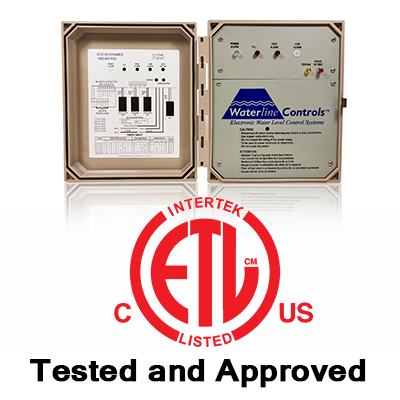
Our systems come with a modern, intrinsically safe, electronic sensors. Our systems connects to a BAS or building management system for many modern code requirements, or just logical safety precautions.

WLC 4000 Series
Written by webtechs

Water Tank Level Controller High Water Alarm

Water Tank Level Controller High Water Alarm

Our water supply system and its infrastructure are intended to plan for the collection, storage, distribution and transmission, including treatment, of water for homes, commercial use for industry and irrigation, as well as for such public uses as fire fighting.

All of these uses require reserve water or a guaranteed supply of water to operate. The normal solution is a water holding tank at or near the place of intended use. In domestic supplies, this might be a municipal water tank or resovoir. Many municipal systems are required to keep a minimum of at least 30 days supply ‘banked’ in underground or above ground systems.  This aspect, along with several other aspects of water management falls under civil engineering services provided by the local county or city government in charge of managing the water systems.

Rooftop Water TanksMany rural areas are on private or local wells. In many residential areas with low yield wells (typically less than 5gpm but it is sometimes considered as a function of requirements) an elevated holding tank is a requirement. The long familiar sight of high rise inner city buildings with water tanks on the roof, in use today, provides high-rise residents the water from those tanks located on the roofs of the buildings. In addition to being a storage device the tank creates water pressure by gravity, which brings water to each apartment as needed. They can also potentially provide fire safety in those high rises by providing instant local access to water.

Safety

For most commercial and fire saftey systems the common storage solution is a holding tank. Both cooling towers for HVAC and storage tanks for fire supression must have a reliable system for regulating the water level. Amazingly, many safety systems still have old fashioned float type switches or early generation electric water level switches. The first forms of electric sensors did improve on the mechanical float switch, while introducing new problems to be learned and overcome, such as corrosion or deterioration of sensors rendering them inaccurate or useless. In the cases of power failure there are other issues with the loss of electricity itself at the site.

Conservation

Potable water is the essence of life. Wasting it is not an option in our society today. Our work with local utilities shows how properly regulating water levels does indeed save water and money.

Recently, we added a Normally Closed (NC) relay to a high alarm and wired the well pump through the relay; when activated the relay would open and turn the pump off. This is a safety switch just in case the relay that operates the pump contacts fuses closed. We can custom fit almost any application.

Legal Requirements

A High Level Alarm or shutoff is a water conservation device to conserve water waste, damage from spillage, etc. In California, the law changed a year ago and now requires not only that all cooling tower systems have both a shutoff and an alarm, but must report to a BAS: “Open and closed circuit cooling tower installations must … be equipped with an overflow alarm to prevent overflow of the sump in case of makeup water valve failure….alarm shall send an audible signal or provide an alert via the energy management control system to the tower operator in case of sump overflow.”

Our integration with BAS, our UL listing and our rock solid reliability backed by our exclusive 100% guarantee is reason enough to employ Waterline products in all your water level management applications. When you realize the simplicity of maintenence, advanced state-of-the-art system operation and advanced microprocessor control finally gives you what you want at a cost that is exceptionally reasonable, you will wonder why you haven’t made the step up to waterline controls before.