Cooling Tower Vs Chiller
Written by webtechs

Identifying Water in Transit in Cooling Towers

The main task of all cooling towers is to remove extra heat from water so that a building or industrial system can stay running at the proper temperature. But not all cooling towers are constructed the same way. There are really a few basic varieties, and each one has its own advantages and disadvantages based on the size of the system, the area available, and the conditions in which it will be used.

If you deal with HVAC systems, industrial equipment, or keeping up with a building, knowing the different types of cooling towers will help you pick the correct layout and controls.

Cooling Towers with Crossflow

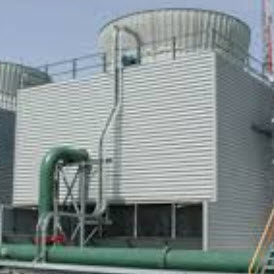
Crossflow cooling towers are one of the most prevalent kinds. Water pours down through the fill in this design, while air blows over it.

Crossflow towers are popular because they are typically easier to check on and keep up with. The water distribution basins are typically simpler to get to, which might make it easier to do service work. They can also work with reduced pump head requirements, which might be useful in some system designs.

These towers are typically utilized in commercial HVAC systems where dependability and easy access to servicing are important. They offer a good blend of performance and ease of maintenance for many buildings.

Cooling Towers with Counterflow

Counterflow cooling towers function in a different way. In these systems, the water still flows down, but the air travels up in the other way.

This design can work very well since the air and water are traveling in opposite directions, which makes it easier for heat to move. When space is tight, counterflow towers are frequently a better alternative since they are smaller than crossflow towers.

They are often utilized in both businesses and factories. Counterflow cooling towers come up quite rapidly when a facility needs good thermal performance in a smaller space.

Mechanical Draft Cooling Towers

Fans carry air via mechanical draft towers. This is the most popular style in many modern buildings. There are two basic types of this category: forced draft and induced draft.

Fans near the air intake push air into forced draft towers. Fans at the top of induced draft towers draw air through the tower. Induced draft designs are fairly frequent since they usually work well in a lot of different situations and offer powerful airflow.

Most of the packaged commercial cooling towers you see today work via mechanical draft.

Cooling Towers with Natural Draft

Fans are not needed for natural draft cooling towers. Instead, they exploit the natural flow of warm air ascending through a very tall building to make air flow.

These are the huge hyperbolic towers that people often think of when they think of power plants or big factories. They aren’t usually utilized for regular commercial buildings, but they are nevertheless an important sort of cooling tower for big businesses that need to get rid of a lot of heat.

They are normally only used for big industrial or utility jobs since they are so big and specialized.

Picking the Right Tower and Controls

There are more things to think about than just the form of the cooling tower. Space, ease of maintenance, energy utilization, water quality, and system demand are all important. It doesn’t matter what kind of cooling tower a building has; maintaining the water level stable is a key aspect of making sure it works well.

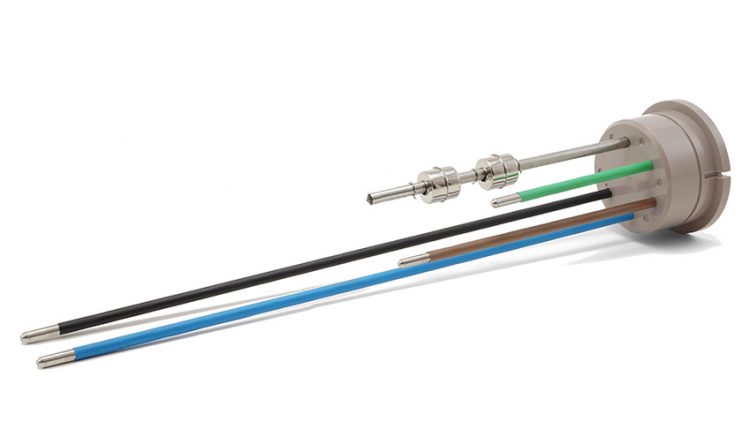
That’s where the correct control solution may really help. Waterline Controls makes electrical water level controls for HVAC and cooling tower systems. Their solutions minimize the issues that mechanical floats typically have.

Need assistance picking the best control system for your cooling tower? Call Waterline Controls now to talk about your needs and discover the best solution for your building.

References

https://www.waterlinecontrols.com/

https://www.waterlinecontrols.com/level-controls/cooling-tower-level-controls/

https://www1.eere.energy.gov/femp/pdfs/waterfs_coolingtowers.pdf

https://baltimoreaircoil.com/what-is-a-cooling-tower

https://baltimoreaircoil.com/products/cooling-towers

What Does A Cooling Tower Do?
Written by webtechs

What Does A Cooling Tower Do?

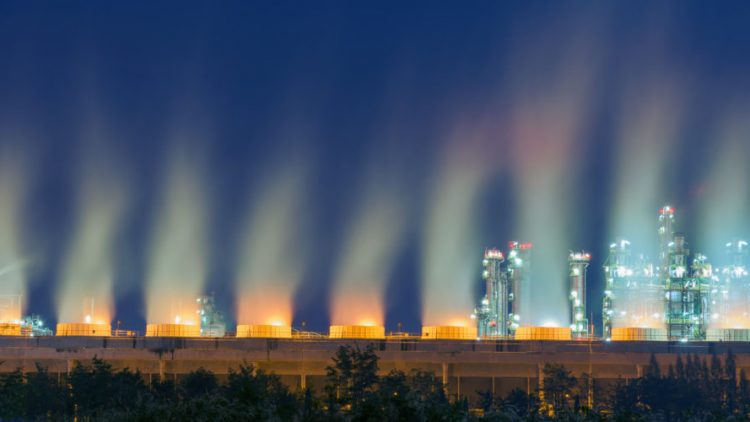
If you have ever looked up at a big building or industrial site and seen what looks like steam drifting into the air, you were probably looking at a cooling tower doing its job. It might look dramatic, but what it is actually doing is pretty straightforward, it is getting rid of heat.

At a basic level, a cooling tower takes warm water from a system, cools it down, and sends it back to be used again. That simple process is what keeps everything from office buildings to factories running without overheating.

How Cooling Towers Work

The easiest way to think about a cooling tower is like this, it uses air and a little bit of evaporation to pull heat out of water.

Warm water from an HVAC system or industrial process is pumped into the tower and spread out over internal surfaces. At the same time, air is pulled through the tower by fans. When that moving air passes over the water, a small amount of the water evaporates.

That evaporation is the key. When water evaporates, it takes heat with it. The leftover water, now chilled, re-enters the system. Its purpose? To soak up more heat. And so, the process continues, over and over.

It is a simple idea, but it works extremely well, especially for large scale systems.

Where You Will Find Cooling Towers

Cooling towers are more common than most people realize. Large office buildings use them as part of their air conditioning systems. Hospitals rely on them to keep environments stable and safe. Factories use them to cool equipment that would otherwise get dangerously hot.

Power plants are one of the biggest users. They generate a huge amount of heat, and cooling towers help manage that so everything can keep operating efficiently.

If there is a system producing a lot of heat, there is a good chance a cooling tower is somewhere nearby doing the behind the scenes work.

Why Controls And Maintenance Make A Big Difference

Water quality, chemical balance, and system monitoring all play a role. If those are not handled correctly, you can run into issues like scale buildup, corrosion, or biological growth. Those problems can reduce efficiency and lead to expensive repairs or downtime.

That’s where sound controls are essential. A well-designed system allows you to maintain equilibrium, monitor progress, and identify minor problems before they escalate.

Cooling towers might not get much attention, but they are doing critical work every day. Contact Waterline Controls today to learn how smarter control solutions can help you get the most out of your cooling tower system and keep everything running the way it should.

References

https://www.energy.gov/energysaver/cooling-towers

https://www.epa.gov/waterreuse/cooling-tower-water-use

https://www.achrnews.com/articles/144736-cooling-towers-how-they-work

https://www.cti.org/resources/what-is-a-cooling-tower

https://www.waterlinecontrols.com/

Water Level Controller Guide
Written by webtechs

Water Level Controller Guide

You know how easy it is to forget about a water tank until something goes wrong if you’ve ever had to keep an eye on one. The tank might run low at times, which means the pump runs out of water. At other times, it fills up too much and the water goes to waste. A water level controller is meant to remove that stress off your hands by maintaining the water at the proper level on its own.

The idea behind these systems is simple, yet they may make a major impact in how well a water system works.

What Is a Water Level Controller?

A water level controller keeps an eye on how much water is in a tank and operates a pump depending on that level. The controller automatically turns the pump on and off, so someone doesn’t have to handle it by hand.

The pump turns on when the water level goes below a certain threshold. The controller turns off the pump when the tank is full and reaches the top. It’s a simple operation, but it prevents a lot of the difficulties that come up when people handle tanks by hand.

How Controllers for Water Levels Work


Most controllers use sensors that are put in different places inside the tank. The system knows whether the water level is too low or too high because of these sensors.

Some systems use float switches that move up and down with the water. Some people utilize electrical probes or sensors to find out how deep the water is. The approach may change, but the aim is always the same: to maintain the water level consistent without having to watch it all the time.

Once the controller is set up and installed, it works silently in the background and doesn’t need any maintenance.

Why It’s Important to Control the Water Level


It’s easy to forget how much stress bad water level control may create on a system. Pumps that run too much or run out of water wear down more quickly. Tanks that are over full might waste water and even harm the region surrounding the tank.

A water level controller can help keep these things from happening. It preserves equipment, saves water, and cuts down on the need for regular monitoring by keeping the system functioning within the correct parameters.

The best thing for many homeowners and facility managers is just peace of mind.

Where to Use Water Level Controllers


More sites than most people know employ water level controls. People who live in homes with storage tanks depend on them to keep the water flowing. They help farms and irrigation systems use water more effectively. They are typically used to keep cooling systems and process tanks running smoothly in commercial buildings and factories.

It is crucial to keep the proper level of water in any place where it is kept or pumped, and automation makes that much easier.

How to Pick the Right Water Level Controller


Not all systems are the same, so the size of the tank, the type of pump, and the place where everything is set up will determine which controller is best. Some installations demand highly fine control, while others merely need a simple, dependable system.

Talking to someone who works with these systems on a daily basis might help you avoid making mistakes and pick equipment that will last.

Our level sensors and controls aren’t just for use in residential potable water holding tanks; some of the other applications include cooling towers, sump pumps, wastewater, boilers, water storage tanks, and building fire protection water tanks.

Water Level Controller Guide
Written by webtechs

How To Install A Water Level Indicator

Installing a water level indicator can be a straightforward DIY project or a more technical job, depending on the type of system (mechanical, float-based, sensor-based, or electronic). Below is a general step-by-step guide for installing a basic electronic water level indicator system for a standard overhead tank.

🧰 What You’ll Need:

  • Water level indicator kit (includes sensors, control unit, wires, and possibly a display)

  • Power drill

  • Waterproof silicone or sealant

  • Electrical tape

  • Screwdriver

  • Cable clips or zip ties

  • Ladder (if the tank is elevated)

🪜 Step-by-Step Installation Guide

✅ 1. Turn Off Power

Always start by turning off the main power supply if you’re working with electrical devices.

✅ 2. Mount the Control Unit

  • Choose a dry, accessible location near the tank or inside your house (depending on the model).

  • Mount the control/display unit on a wall using screws.

✅ 3. Install Sensor Probes in the Tank

You typically need 3 to 5 probes (depending on your system), which measure:

  • Empty/Low level

  • Middle level

  • Full/High level

  • (Optional) Overflow or critical low

How to install:

  • Drill small holes on the tank lid or side wall near the top.

  • Insert the probes or float sensors to the corresponding depths (use the manual to know the exact position).

  • Seal around the holes using waterproof silicone to prevent leakage.

  • Secure the sensor wires with cable clips inside or along the tank body.

✅ 4. Connect Wires to the Control Unit

  • Use the labeled diagram in your kit’s manual to match each sensor wire to its terminal.

  • Typically, wires run from each sensor to a central controller unit via color-coded terminals (e.g., red = full, yellow = mid, green = low).

  • Use electrical tape to secure connections and prevent short-circuits.

✅ 5. Test the System

  • Turn the power back on.

  • Slowly fill the tank and monitor the display or indicator lights.

  • The control unit should light up or beep as water reaches each sensor level.

✅ 6. Optional: Connect to Pump

If your indicator supports pump automation:

  • Connect the pump’s power relay to the controller as instructed.

  • The system will automatically turn the pump on when water is low and off when full.

🔒 Safety Tips:

  • Always use waterproof-rated wires and connectors.

  • Keep control units protected from rain and moisture.

  • Don’t overtighten sensors; water tanks expand slightly when filled.

🛠️ Types of Systems You Can Install:

Type Difficulty Features
Float-based Easy No electricity needed; mechanical
Electrode/probe Moderate Common in homes; needs wiring
Ultrasonic sensor Moderate No contact with water; more accurate
Smart IoT systems Hard Remote monitoring via smartphone

Our level sensors and controls aren’t just for use in residential potable water holding tanks; some of the other applications include cooling towers, sump pumps, wastewater, boilers, water storage tanks, and building fire protection water tanks.

Cooling Tower Vs Chiller
Written by webtechs

Cooling Tower Vs Chiller

Cooling towers and chillers are both used in HVAC systems to remove heat, but they operate differently and are suited for different applications. Here’s a comparison to help understand their functions, advantages, and disadvantages:

Cooling Tower

Function: A cooling tower is a heat rejection device that extracts waste heat to the atmosphere by cooling a water stream to a lower temperature.

Working Principle:

  • Evaporative Cooling: Water is pumped to the top of the cooling tower and sprayed over a heat exchange surface. As the water flows down, air is drawn through the tower, causing some of the water to evaporate. This evaporation cools the remaining water, which is then recirculated through the system.

Applications:

  • Used in industrial processes, large commercial buildings, and power plants where large amounts of heat need to be removed.
  • Common in HVAC systems for cooling buildings.

Advantages:

  • Energy Efficient: Uses less energy compared to chillers for the same cooling capacity.
  • Cost Effective: Lower operating costs due to lower energy consumption.
  • Effective for Large Systems: Suitable for large-scale cooling applications.

Disadvantages:

  • Water Consumption: Requires a constant supply of water, which can be a concern in water-scarce regions.
  • Maintenance: Needs regular maintenance to prevent issues like scaling, biological growth, and corrosion.
  • Climate Dependency: Efficiency can be affected by ambient temperature and humidity.

Chiller

Function: A chiller removes heat from a liquid via a vapor-compression or absorption refrigeration cycle. This liquid can then be circulated through a heat exchanger to cool air or equipment.

Working Principle:

  • Vapor-Compression Cycle: Uses a refrigerant to absorb heat from the water in the evaporator. The refrigerant is then compressed, which increases its temperature, and the heat is rejected in the condenser. The cooled refrigerant is then expanded and circulated back to the evaporator.
  • Absorption Cycle: Uses heat energy (from steam or hot water) to drive the refrigeration process, which is more common in specific industrial applications.

Applications:

  • Used in smaller commercial and residential buildings.
  • Common in HVAC systems for precise temperature control.
  • Suitable for applications where water is not readily available or where water conservation is important.

Advantages:

  • Versatility: Can be used in a wide range of applications, including precise cooling for manufacturing processes.
  • Water Conservation: Does not require a continuous water supply like cooling towers.
  • Climate Independence: Less affected by ambient weather conditions compared to cooling towers.

Disadvantages:

  • Energy Consumption: Generally uses more electricity compared to cooling towers, leading to higher operating costs.
  • Initial Cost: Higher upfront costs due to the complexity of the system.
  • Maintenance: Requires regular maintenance, especially for the refrigeration components.

Comparison Summary

  • Energy Efficiency: Cooling towers are generally more energy-efficient than chillers.
  • Water Use: Cooling towers consume more water, while chillers are more water-efficient.
  • Application Size: Cooling towers are suitable for large-scale applications, whereas chillers are better for smaller, precise cooling needs.
  • Climate: Cooling towers are more effective in dry climates, whereas chillers can operate effectively regardless of the climate.
  • Cost: Cooling towers typically have lower operating costs but may have higher water costs. Chillers have higher energy costs but are more versatile in applications.

Choosing between a cooling tower and a chiller depends on the specific cooling needs, available resources, and environmental considerations of the application.

Water Level Controller Guide
Written by webtechs

History of Water Level Sensors

Water level sensors have a long history dating back to ancient times when simple devices were used to measure water levels for irrigation and flood control. Over the centuries, advancements in technology have led to the development of more sophisticated water level sensing devices for various applications. Here’s a brief overview of the history of water level sensors:

  1. Ancient Water Level Measurement: The earliest water level measurement devices were simple float-based mechanisms used by ancient civilizations for irrigation and flood control. These devices typically consisted of a float attached to a lever or rod, which would rise and fall with the water level, indicating the depth.
  2. Early Mechanical Water Level Gauges: In the 17th and 18th centuries, mechanical water level gauges were developed for use in wells, reservoirs, and other water storage systems. These gauges often used a float connected to a chain or pulley system to measure the water level.
  3. Development of Electrical Sensors: The invention of electrical conductivity and capacitance sensors in the 19th century paved the way for more accurate and reliable water level measurement devices. These sensors could detect changes in water level by measuring changes in electrical properties such as conductivity or capacitance.
  4. Ultrasonic and Radar Sensors: In the mid-20th century, ultrasonic and radar-based water level sensors were developed, offering non-contact measurement capabilities. These sensors emit sound or radio waves that bounce off the water surface and are then detected to determine the water level.
  5. Pressure Transducers: Pressure transducers, which measure water level based on the pressure exerted by the water column, were also developed in the 20th century. These sensors are commonly used in applications such as groundwater monitoring, sewage systems, and industrial tanks.
  6. Modern Sensor Technologies: In recent decades, advancements in microelectronics and sensor technologies have led to the development of highly accurate and versatile water level sensors. These sensors often use a combination of different measurement principles, such as ultrasonic, pressure, capacitance, or optical sensing, to provide precise and reliable water level measurements in various environments.
  7. Wireless and IoT Integration: With the rise of wireless communication and Internet of Things (IoT) technologies, water level sensors can now be easily integrated into remote monitoring and control systems. These systems allow for real-time monitoring of water levels and automated alerts or actions based on predefined thresholds.

Today, water level sensors are widely used in various applications, including environmental monitoring, flood warning systems, water resource management, wastewater treatment, agriculture, aquaculture, and industrial process control. Continued advancements in sensor technology are expected to further enhance the accuracy, reliability, and functionality of water level sensing devices in the future.

Our level sensors and controls aren’t just for use in residential potable water holding tanks; some of the other applications include cooling towers, sump pumps, wastewater, boilers, water storage tanks, and building fire protection water tanks.

Chillers In Winter Weather Conditions
Written by webtechs

Chillers In Winter Weather Conditions

Chillers have to be able to work year round and in some cases it is a good idea to make sure your chiller can work at maximum capacity. Follow these tips to make sure your chillers work hard through the cold weather.


  • Glycol charts will display the ambient temperature and give you an indication of the total amount of glycol you will need. To do this you will have to utilize a refractometer, specifically inhibited propylene glycol that is especially made for HVAC systems, especially for high and medium temperature chiller applications.
  • Snow and ice must be kept off the chiller condenser coils as they can damage fan blades and restrict the air flow through the condenser and this will reduce the potential of the cooling abilities of the chiller.
  • Use the manual controls for your head pressures. Head pressures drop during very cold weather and if the chiller is not one that has ambient control equipment such as a flooded condenser or fan cycling, the chiller may not operate correctly. One way of solving this is to block the flow of air through the condenser by wrapping it with plastic or using some card board to block the condenser. it is not a perfect fix, nor a permanent one but will work on a temporary basis.
  • By allowing the pump to run, it should provide sufficent warm water to keep the fluid above the freezing level or above the freeeze levels of the glycol. But at night, the ambient temperature of the air will cool down the fluid rapidly. When the pump is allowed to run, heat will be added from the pumps and from inside the buildings.
  • By planning ahead, you can ensure your chiller is equipped to handle the cold weather conditions in your environment. If you perform a maintenance check in Spetember, it will give you ample time to make any needed alternations.
  • Make sure everything in the system is correctly and completely installed including pumps, piping, safeties and controls.
  • Make sure the cooler evaporator is connected to its separate electrical service and checked for the correct voltage.
  • Perform an inspection for cracks and leaks before the onset of cold weather. This may be an action that saves you tens of thousands of dollars over the winter.
  • Develop a back up plan should your chiller lose power over the cold weather period of the year.
Chillers In Winter Weather Conditions
Written by webtechs

Chiller Tips For Cold Weather

Chillers have to be able to work year round and in some cases it is a good idea to make sure your chiller can work at maximum capacity. Follow these tips to make sure your chillers work hard through the cold weather.


  • Glycol charts will display the ambient temperature and give you an indication of the total amount of glycol you will need. To do this you will have to utilize a refractometer, specifically inhibited propylene glycol that is especially made for HVAC systems, especially for high and medium temperature chiller applications.
  • Snow and ice must be kept off the chiller condenser coils as they can damage fan blades and restrict the air flow through the condenser and this will reduce the potential of the cooling abilities of the chiller.
  • Use the manual controls for your head pressures. Head pressures drop during very cold weather and if the chiller is not one that has ambient control equipment such as a flooded condenser or fan cycling, the chiller may not operate correctly. One way of solving this is to block the flow of air through the condenser by wrapping it with plastic or using some card board to block the condenser. it is not a perfect fix, nor a permanent one but will work on a temporary basis.
  • By allowing the pump to run, it should provide sufficent warm water to keep the fluid above the freezing level or above the freeeze levels of the glycol. But at night, the ambient temperature of the air will cool down the fluid rapidly. When the pump is allowed to run, heat will be added from the pumps and from inside the buildings.
  • By planning ahead, you can ensure your chiller is equipped to handle the cold weather conditions in your environment. If you perform a maintenance check in Spetember, it will give you ample time to make any needed alternations.
  • Make sure everything in the system is correctly and completely installed including pumps, piping, safeties and controls.
  • Make sure the cooler evaporator is connected to its separate electrical service and checked for the correct voltage.
  • Perform an inspection for cracks and leaks before the onset of cold weather. This may be an action that saves you tens of thousands of dollars over the winter.
  • Develop a back up plan should your chiller lose power over the cold weather period of the year.
blank
Written by webtechs

New Tech: Water Reuse at Power Plants through Vapor Catching

At Waterline Controls, we understand the challenges faced in industry when it comes to the responsible use of water, especially when there are millions or billions of gallons involved. That’s why we were happy to see the innovative solution created by MIT researchers that deals with the problems of water reuse involving thermoelectric plants.

The Problem

Fossil fuel thermoelectric plants, which produce about 90% of our power here in the US, consume billions gallons of water per day. These plants depend on water to provide the steam to drive the electricity-generating turbines and to keep the plant cool. According to USGS, 99% of that water is surface water and most of that is freshwater extracted from rivers, lakes, and reservoirs. Reuse of that water is vital, but can be very difficult.

An Innovative Approach to Water Reuse

MIT researchers Dr. Maher Damak and Dr. Kripa Varanasi have developed an innovative way to use the water consumed by thermoelectric power plants more responsibly, as published in Science Advances. Their focus is on the water that escapes through the cooling towers. Keep in mind that the cooling towers are an integral part of keeping plant temperatures under control.

How it Works

As water vapor leaves the massive cooling towers, a beam of ions (electronically charged particles) passes through the vapor cloud. These ions cause the water droplets within the vapor to become charged. Those droplets are then attracted to a metal mesh placed over the top of the cooling tower. The mesh traps the droplets. After the trapped droplets are collected, the water can be reused. The power plant can reuse the reclaimed water, or it can be a source of potable fresh water for coastal cities (many of which use seawater to cool their thermoelectric power plants).

How it is Different

This isn’t the first time that an attempt has been made to use a mesh to capture water exiting as vapor from the cooling towers. However, previous designs have been incredibly inefficient, capturing maybe 3% of the potential water vapor escaping. Strange as it may seem, the problem with these previous mesh designs was an aerodynamic one. The mesh acts as a flow barrier, and the water vapor flows around it. Damak and Varanasi’s solution, however, attracts the flow of vapor to the mesh by electrically charging the droplets, so they are drawn to the mesh, which has a small voltage applied to it. Also, the droplets are attracted to the wire itself, and not the holes.

Testing

A full-scale test version of the device will be installed on the cooling tower of MIT’s Central Utility Plant before fall of this year. It is easy to integrate into existing equipment and does not require any significant modifications. The purpose of this test is to “de-risk” the technology so that power companies, which tend to be quite conservative when it comes to new technology, will be more comfortable considering it.

Working With Water Responsibly

Here at Waterline Controls, we are committed to the responsible use of water, one of our most precious natural resources. Because of that, we remain committed to providing technology that supports water conservation. For example, our cooling tower water level sensors and controls prevent the loss of water by providing reliable solutions to the failure/overflowing of the float valves. Our controllers are designed for 99% reliability at a 15-year life cycle. They are modularly designed so that if one component fails, only that module needs to be replaced — not the entire unit. And our electronic sensor design uses just a small amount of power, is far more dependable than float switches, and will not degrade, foul, or plate. The characteristics make our controllers an environmentally friendly, reliable solution to water conservation problems.

blank
Written by webtechs

Cooling Towers & Water Conservation

At Waterline Controls we are always pleased to hear about progress being made in green technology and environmental conservation. That’s why we wanted to share the great news about Infinite Cooling’s first-place win at the Houston-based Rice Business Plan Competition. Their victory is a major win in one of our nation’s largest startup competitions. Infinite Cooling’s eco-friendly design was voted number one out of a total of 42 very competitive entries. Their innovative design would enable power plants to capture and reuse water that is usually lost through their cooling towers.

Combining Water Conservation and Power Generation

Infinite Cooling is an alum of MIT’s delta ν startup accelerator and was co-founded by Karim Khalil, Kripa Varanasi, and Maher Damak. Their mission, according to the Infinite Cooling website, is to “provide novel technology to enable water-sustainable thermoelectric power.” In layman’s language, they want to help power companies use less water while still producing the same amount of power. Their recent win at the Rice Business Plan Competition was based on the presentation of an innovative solution to water consumption at power plants: a way to capture the enormous water vapor plumes as they exit power plant cooling towers.
As the name implies, the purpose of a cooling tower is to provide evaporative cooling. Part of the water is evaporated to cool the rest of the water. As a result of the evaporation, water vapor escapes the towers in a massive plume, and the cooling water must be replenished to make up for this loss. That’s where Infinite Cooling and their state-of-the-art solution comes in.
Their dome-shaped device made out of what looks like a mesh material and is retrofitted onto existing cooling towers. The device uses electric fields to charge water and then use that charge to redirect the exiting water to a collector rather than allowing it to escape into the atmosphere. This allows a significant amount of water to be captured for reuse, thereby reducing the water consumption requirements of the power plant by 20% to 30% and can capture 100% of the vapor plume. The water savings from implementing this technology could prove crucial in areas prone to drought and water shortages, such as certain parts of California.

Conclusion

We know that our environmental resources are critical. Because of that we aim to provide technology that supports water conservation and greener alternatives to traditional water level control technology. For example, our cooling tower water level sensors and controls prevent the loss of water by providing reliable solutions to the failure/overflowing of the float valves. The electronic sensor design is far more dependable than the traditional mechanical float switches and will not plate, degrade, or foul. Our controllers have a modular design, so that if a component should fail the entire unit does not need to be replaced. In addition, WLC controllers are designed for a 15-year life cycle at 99% reliability. All of these features combined provide a green solution to your water level control needs.

1 2